Wednesday, November 16, 2011


Monday, October 10, 2011
Tuesday, September 13, 2011
Cromity and Day: United by Music by Lani Conway
Printed from The Fort-Green Patch News September. 12. 2011
Dennis Day (left) and Steve Cromity (right) performed a 9/11 tribute concert at last night at Two Steps Down. Credit Lani Conway
Cromity and Day after filming a scene on the Brooklyn Bridge for "Unfinished Business," a 9/11 film documentary produced by Day Credit Lani Conway
Add your photos & videos
Though they shared a bond forged during the terrorist attacks of Sept. 11, Fort Greene resident Steve Cromity and Dennis Day didn't actually meet until six years later—and then only by chance at a New York vocal competition.
But last night at Two Steps Down in Fort Greene, the two musicians were once again reunited to commemorate the 10th anniversary of the terrorist attacks on Sunday.
“No more time for fear, I know where I’m going,” Cromity sang to a packed house in the upstairs room of the Dekalb Avenue restaurant.
Ten years ago, Cromity would have told a different story.
On Sept. 11, no one at the Port Authority of New York and New Jersey knew Cromity was also an aspiring jazz singer when he went to work that fateful morning. The night before, Cromity, who was the manager of construction in the bi-state agency's engineering department, had been out late. He had spent the night jamming at a Long Island bar like he did every Monday, but still managed to make it on time from his Queens home to his early morning meeting.
On the 73rd floor of his boss’s office, Cromity stared out the window, noting the clear view of the Statue of Liberty and the blue waters of the Hudson River. Suddenly, a tremendous jolt sent the building into a violent swing that nearly knocked Cromity to his feet.
American Airlines Flight 11 had struck the north tower of the World Trade Center twenty floors above, clouding his perfect view with a shower of ash and smoke. The singer who found inspiration in jazz vocalists like Eddie Jefferson, filed down the stairs with the rest of the staff, encouraging firefighters as they ascended past him with their pounds of equipment and into a “no escape situation.”
Below, a few blocks from the building, Dennis Day, gazed up at the north tower’s smoking hole, clutching the hand of a woman whose son worked on the 104th floor. Moments ago, she was frantic, crying out to anyone who would help.
When the first plane struck, Day, who was also a part-time singer, was on his way from Upper Manhattan to his office at the New York Division of Housing and Community Renewal on Beaver Street. He was still holding the mother’s hand when the second plane hit. Day and the woman started to run.
It was then that Day began to question his life’s purpose.
“As I was escaping, something told me that if I get out of this, I should change my trajectory,” he said. “I instantly made the decision to focus on singing, music, composing and developing as a musician and artist.”
Six years later, after meeting each other at the vocal competition, the two discovered they had a shared experience via Facebook. “We didn’t know it, but we had more in common than just music,” Cromity said.
According to Cromity, 9/11 served as a motivation to continue developing his musical talents. He started singing on the side a year earlier, but made his talents known with the release of his debut album, “Stepping Out” in 2004. In 2005, Cromity retired.
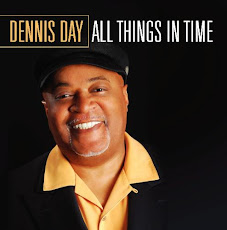
For Day, 9/11 had more of a direct impact. He immediately began to write his own music and enrolled in a media arts master’s program at Long Island University before retiring from his state job in 2006. A year later, he released “All Things in Time,” a collection of interpreted songs by popular jazz greats. Just two months ago, the East Chicago native with a love for blues, doo-wop and rock, performed at his first piano recital.
More recently, Cromity and Day shot a scene from “Unfinished Business,” a film project Day started shortly after Sept. 11 to recount the events and experiences of that day. The scene showed Cromity walking from the Brooklyn side and Day from the Manhattan side of the Brooklyn Bridge. They stopped in the middle of the bridge to reflect on their 9/11 experiences and their music.
Sunday night, amidst the lively crowd’s energetic claps and cheers, Cromity and Day continued that conversation onstage, singing a line from “Don’t Get Scared,” a popular duet by noted vocalese artist, King Pleasure: “When you see danger facing you, little boy don’t get scared.”
“We talked about doing the song because all of us were frightened on that day,” Day said. “It seemed to speak to the whole idea of trying to talk and support one another through a crisis.”
Dennis Day (left) and Steve Cromity (right) performed a 9/11 tribute concert at last night at Two Steps Down. Credit Lani Conway
Cromity and Day after filming a scene on the Brooklyn Bridge for "Unfinished Business," a 9/11 film documentary produced by Day Credit Lani Conway
Add your photos & videos
Though they shared a bond forged during the terrorist attacks of Sept. 11, Fort Greene resident Steve Cromity and Dennis Day didn't actually meet until six years later—and then only by chance at a New York vocal competition.
But last night at Two Steps Down in Fort Greene, the two musicians were once again reunited to commemorate the 10th anniversary of the terrorist attacks on Sunday.
“No more time for fear, I know where I’m going,” Cromity sang to a packed house in the upstairs room of the Dekalb Avenue restaurant.
Ten years ago, Cromity would have told a different story.
On Sept. 11, no one at the Port Authority of New York and New Jersey knew Cromity was also an aspiring jazz singer when he went to work that fateful morning. The night before, Cromity, who was the manager of construction in the bi-state agency's engineering department, had been out late. He had spent the night jamming at a Long Island bar like he did every Monday, but still managed to make it on time from his Queens home to his early morning meeting.
On the 73rd floor of his boss’s office, Cromity stared out the window, noting the clear view of the Statue of Liberty and the blue waters of the Hudson River. Suddenly, a tremendous jolt sent the building into a violent swing that nearly knocked Cromity to his feet.
American Airlines Flight 11 had struck the north tower of the World Trade Center twenty floors above, clouding his perfect view with a shower of ash and smoke. The singer who found inspiration in jazz vocalists like Eddie Jefferson, filed down the stairs with the rest of the staff, encouraging firefighters as they ascended past him with their pounds of equipment and into a “no escape situation.”
Below, a few blocks from the building, Dennis Day, gazed up at the north tower’s smoking hole, clutching the hand of a woman whose son worked on the 104th floor. Moments ago, she was frantic, crying out to anyone who would help.
When the first plane struck, Day, who was also a part-time singer, was on his way from Upper Manhattan to his office at the New York Division of Housing and Community Renewal on Beaver Street. He was still holding the mother’s hand when the second plane hit. Day and the woman started to run.
It was then that Day began to question his life’s purpose.
“As I was escaping, something told me that if I get out of this, I should change my trajectory,” he said. “I instantly made the decision to focus on singing, music, composing and developing as a musician and artist.”
Six years later, after meeting each other at the vocal competition, the two discovered they had a shared experience via Facebook. “We didn’t know it, but we had more in common than just music,” Cromity said.
According to Cromity, 9/11 served as a motivation to continue developing his musical talents. He started singing on the side a year earlier, but made his talents known with the release of his debut album, “Stepping Out” in 2004. In 2005, Cromity retired.
For Day, 9/11 had more of a direct impact. He immediately began to write his own music and enrolled in a media arts master’s program at Long Island University before retiring from his state job in 2006. A year later, he released “All Things in Time,” a collection of interpreted songs by popular jazz greats. Just two months ago, the East Chicago native with a love for blues, doo-wop and rock, performed at his first piano recital.
More recently, Cromity and Day shot a scene from “Unfinished Business,” a film project Day started shortly after Sept. 11 to recount the events and experiences of that day. The scene showed Cromity walking from the Brooklyn side and Day from the Manhattan side of the Brooklyn Bridge. They stopped in the middle of the bridge to reflect on their 9/11 experiences and their music.
Sunday night, amidst the lively crowd’s energetic claps and cheers, Cromity and Day continued that conversation onstage, singing a line from “Don’t Get Scared,” a popular duet by noted vocalese artist, King Pleasure: “When you see danger facing you, little boy don’t get scared.”
“We talked about doing the song because all of us were frightened on that day,” Day said. “It seemed to speak to the whole idea of trying to talk and support one another through a crisis.”
Monday, September 5, 2011
Saturday, June 18, 2011
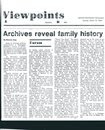
Archives Reveal Family History
Before the wave of genealogical reality shows appeared on television, predating Ancestry.com and DNA swabs that connect folks to common ancestors, I had begun to do serious research into my ancestral roots. It's ongoing and here is an article that I wrote and published in the New York Gannett newspaper chain in 1984. After reading the book "The Warmth of Other Suns" about the Great Migration of blacks from the South, I have decided to post my original article here:
Viewpoints
Gannett Westchester Newspapers Sunday, March 18, 1984 Section B, Page 8
Viewpoints
Gannett Westchester Newspapers Sunday, March 18, 1984 Section B, Page 8
Daily, the National Archives, headquartered in Washington, becomes a beehive of activity. It is a place where tourists gaze into microfilm machines examining census records hoping to connect the branches of their family trees.
An occasional researcher manages to experience the jubilation Alex Haley, author of “Roots,” must have derived in his first association of two clue words, “kamby balongo” (river) and “malonga” (drums”), words passed down to him through stories as told by his African ancestors.
Family histories are often handed down orally and not recorded, so it is rare when the casual tourist does connect the links in his or her family tree. Facts such as county of residence, age, and origin of birth often become distorted so that by the time th serious researcher has assembled useful clues, the processes of gleaning fact from fiction becomes the researcher’s nightmare.
Changes in zoning laws and the names of cities and towns over the years can literally, on paper, displace entire families into different governmental suburbs, towns, villages or counties. Because of dislocations resulting from natural catastrophe, nonuniform census laws and lost census data, only one in 100,000 Americans is able to trace his family origins. The National Archives, located several blocks east of the White House, is a prime source for finding valued volumes of family census and manuscripts.
In 1977 I had written a column for the now-defunct Philadelphia Evening Bulletin that criticized London Times reporter Mark Ottaway’s assertion that Haley’s work was based upon bogus research. Curiosity over my own heritage later would lead me to embark upon a genealogical journey armed with two clues; the name of my great-grandfather, Anderson Day, and the county of Barbour in Alabama. I began.
First, I registered along with the other anxious tourists. I was then given a card that entitles one to conduct research. I came across the Alabama volume and proceeded to seek references to the surname Day.
Hundreds of Days surfaced; all were Caucasian and no blacks were shown. After a conversation with an archives floor supervisor I learned that only free blacks were counted in the Alabama census before 1880, and only those owning property in many cases were even included in 1880 and afterwards until the census laws were reformed.
Now as I reeled through the microfilm, traveling through each of the Alabama counties of 1880, I recalled our family’s brief trips to Phenix City, Alabama, my father’s hometown about which a movie was made entitled “The Phenix City Story.” The film depicted the violence, corruption, and racism in the deep South of the mid 1950’s. There were memories of learning to ride bareback and being baffled by stern parental instruction in proper southern etiquette when found among southern white folk.
The customary, “yes, sir” and “yes, ma’am” apparently were valuable lessons when traveling south for northern black children in the 1950’s. The nostalgia had begun to fade when suddenly the name Anderson Day appeared! Several long distance telephone calls confirmed my finding. But shown among the household reported in the census records was even another black male: Simon Peter Day, 75, relationship to the head of household: father, birthplace: Virginia. Apparently, I had stumbled across an heretofore undisclosed family fact. Patriarch Simon Peter Day had lived with his wife, Julia, 60, and son, Anderson Day, in an extended nuclear family so common in 1880.
By cross referencing census tracts, historical data gathers new information, new births, deaths, marriages, and changes in economic status such as from sharecropper to property holder.
Next, I would spread my search into Virginia, Simon Peter’s birthplace, in search of any references documenting his origins there. By day’s end, I had gone through the Virginia census of 1810 for Fairfax County when I found head of family Simon Peter Day, status: free Negro, servants: two slaves owned.
National Archives supervisors attested to the rarity of my discovery. Only a few free Negroes were even registered in Virginia during this census period. Fairfax County, VA is separated from the District of Columbia by the Potomac. A 1792 law requiring free blacks to register was largely ignored for 20 years, so a number of blacks freed or born free of the estates of George Washington and George Mason, whose Declaration of Rights in the Virginia constitution was an inspiration for the Declaration of Independence, were irregularly recorded.
I found the best theory and clues to my ancestors’ movements in the Fairfax Chronicles, a Virginia history newsletter. By 1782, the number of blacks in Fairfax County was more than 3,600, 41 percent of the population. One hundred eighty-eight of these were owned by Washington and 125 by Mason, whose wealth allowed him leisure time to write his declaration.
The 1782 Virginia emancipation law allowed free blacks to remain in Virginia. Then the 1782 law was amended in 1806. Simon Peter was in his teens. The amended law provided that all newly freed blacks once again were legally required to leave Virginia or risk being sold into slavery.
The incentive to remain free seemed the only reasonable one as I reflected on that memorable day in the archives. Simon Peter Day desired freedom for himself and his family.
Friday, March 18, 2011
Melvin Sparks Allowed His Music to Transcend Race and Religion
Melvin Sparks Allowed His Music to Transcend Race and Religion
by Dennis Day on Thursday, March 17, 2011 at 10:29pm
I attended the funeral of Melvin Sparks Hassan today, in Mt. Vernon, New York, 20 miles north of Manhattan. Melvin was a devout Muslim. He passed Tuesday, March 15th. suffering a heart attack at home, he was 64 years old.
It was a very interesting learning experience for non-Muslims like me. I learned about some aspects of the Islamic faith that were unfamiliar to me , particularly regarding sacred burial customs. America is a remarkably diverse place. Our nation’s diversity is its strength. As global citizens we must actively pursue experiences that broaden our individual and collective understanding of one another . Sadly many of our citizens balk at learning about others customs and beliefs. It therefore becomes easier to demonize and cast those not sharing the majority’s beliefs and practices as so called “others” even when the “other” represents over a billion human beings on the planet. Many great musicians and friends paid their respects to the Texas born guitarist. They represented every creed : Jews, Muslims, Christians, race, gender and nationality. Melvin's new band consists of young white musicians whose love and devotion for this gentle soul was apparent, Sparks is regarded as one who helped pioneer the genre known as Acid Jazz. Band members attempted to hold back tears of grieve when sharing memories and amusing stories of long hours traveling on the road together. The guitarist and band leader’s impact on his young charges was highlighted in terms of his being caring but stern father figure. He was described as a wonderful mentor, teacher and wise disciplinarian. Recalling their leader as one infused with a joy for life, love of music and friendship proved too over whelming . Their tears flowed as the audience listened but ceased after a vibrant musical jam session and repast in celebration of Melvin’s remarkable life .
Melvin never seemed to wear his faith on his sleeve, he lived it with a generous and buoyant spirit. Having known and gigged with Melvin over the years, I’m hopeful and believe that racial and religious tolerance are achievable. He left a fine example for his fellow Muslims, and Non- Muslims alike to immulate in terms of learning to respect and value others solely on the basis of the content of their character.
At the repast, I was privileged to sing with Nathan Lucas the wonderful Hammond B3 organist and a fine trio anchored by drummer, Jessie "Cheese" Hamin before an appreciative gathering of family, artists and hosts of friends. It was a beautiful home going celebration. RIP
Sunday, February 13, 2011
Roots Will Endure by Dennis Day
During this Black History Month I dug into my personal archives and would like to share the following essay. The explosion in genealogical research, triggered over three decades ago by Alex Haley’s landmark book Roots and the blockbuster TV miniseries that followed, continues to attract thousands of researchers seeking to make ancestral connections. I published the following essay in the Philadelphia Evening Bulletin in 1977, immediately after the first airing of Roots, in response to a critique of Haley’s work. Shortly after the Roots sensation, I began my own genealogical journey and discovered an amazing familial history. More on that later. Here is my essay:
During the coldest week of the winter, a reported 130 million Americans viewed the ABC-TV dramatization “Roots” and were led to reflect in their cozy living rooms on the barbarous conditions that were imposed on blacks under chattel slavery.
During the coldest week of the winter, a reported 130 million Americans viewed the ABC-TV dramatization “Roots” and were led to reflect in their cozy living rooms on the barbarous conditions that were imposed on blacks under chattel slavery.
Now efforts are afoot to discredit not only the grand patriarch of “Roots” – Kunta Kinte – but also the literary judgment of his grandson four times removed, Alex Haley, the book’s author.
Thanks to reporter Mark Ottoway of the London Times, who went sleuthing in the Gambian village where Haley sought his ancestral fathers, a remarkable feat of genealogical detective work is being questioned on its merits as a historical narrative.
Ottoway’s attempt to debunk the book could have a depressing effect on Juffure, the Gambian village where Kunta Kinte grew up. As a result of Haley’s narrative, the village is becoming a tourist attraction. But more is at stake in the “Roots” controversy than the economic fortunes of an African village, as important as they are.
Ottoway’s dig at the roots of “Roots” smacks of sensationalism; of a desire to unmask the book as more fantasy than fact. But his effort to reduce Haley’s chronicle to a mere myth won’t alter the symbolic truth behind the people and events depicted by Haley. “Roots” will not wither nor die.
Ottoway is within his rights to challenge, question, and seek the truth. Sound investigative journalism helped shed light on the Watergate fiasco for Americans. Yet it somehow seems absurd that a work that took over 12 years to complete should face a serious challenge from a reporter whose counter-intelligence efforts took an estimated nine days.
Ottoway’s main charge is that, in his eagerness to discover his African ancestors, Haley was the victim of a bogus “griot,” or village historian. The Britisher claims that, having been apprised of Haley’s quest beforehand, the griot obliged with “facts” to fit Haley’s dream.
Ottoway, in short, asserts that Haley learned of Kunta Kinte from a man of “notorious unreliability.” Yet cultural anthropologists have long valued the accounts of “griots” in cultures in which oral history flourishes. Village griots are not to be confused with village idiots. In cultures that rely on oral history, they have a position of real trust and status.
One should not forget that Haley’s search for his African roots began with cherished stories about “the defiant African” that were told by Haley’s relatives on balmy southern nights in Henning, Tennessee.
After diligent searching through plantation records, Haley was able to fill in most of the details of the American lives that preceded his. With the help of a linguistic expert in 1967, Haley traced his bloodline in Gambia through three African words that were used commonly and idiomatically among the villagers of Gambia.
Haley must have known how much scrutiny his book would attract, and he has offered to debate his critics on the reliability of his methods. As one who heard the author lecture in 1974 at a Midwestern college, prior to the publication of “Roots” my single most lasting impression was of the precision and consummate dedication that Haley was investing in the completion of his genealogical mosaic.
The Mark Ottoways of the world will undoubtedly persist, by their own lights, with the same sort of tenacity – and no doubt there will be critics of the critics.
As the critics attempt to uproot “Roots,” however, the sad thing will be their lack of facility in sorting out the forest from the trees. Despite minor technical flaws that some historians have found in “Roots,” the spirit of Kunta Kinte’s epic will prevail and its importance as a human chronicle will stand as tall as the California redwoods.
(Dennis Day is a supervisor in the Division of School Extension of the Philadelphia School District.)
Tuesday, February 8, 2011
Bill O'Reilly's Interview with President Obama:Truth Zealot or Rude Pundit?
According to some pundits, Bill O’Reilly did exactly what he was hoping not to do. Before the interview O’Reilly wrote that he would not interrupt the president. In their previous interview during the 2008 presidential election, O’Reilly reportedly had interrupted Obama multiple times. But now O’Reilly asserted he could not do that because Obama is now the president and there is protocol to presidential interviews. There is an ethos among journalists that makes it impolite to interrupt the President of the United States. Even if you don’t respect the man, you should respect the office. But O’Reilly showed little respect and interrupted the president almost every time he spoke.
Some pundits, like those from the Center for Pragmatism, believe the interview will hurt O’Reilly and help Obama, observing that Obama came across as friendly even to a fierce critic. O’Reilly on the other hand seemed arrogant, rude, and disrespectful. An empirical analysis presented on MSNBC's Lawrence O'Donnell's show Monday and Tuesday nights indicates that O'Reilly interrupted the president 72 times -- once every 19 seconds -- during their highly anticipated interview, without allowing Mr. Obama to complete one thought.
O’Reilly doled out an unprecedented display of incivility, rudeness, and what I perceive as misguided paternalism dished to the wrong guy. The president was, as usual, presidential and appeared above the fray, like a tolerant school master suffering a mischievous student prankster. Despite the verbal bombast, O’Reilly’s interview failed to garner the blockbuster viewer numbers Fox and O'Reilly had anticipated. Apparently Fox executives had projected Barbara Walters-Monica Lewinski-type viewership numbers but fell far short of their ratings expectations.
It's disappointing to see Fox analyst Juan Williams towing the Fox spin hook, line, and sinker. I’ve met and interviewed Juan Williams and I find him to be a real gentleman and astute political analyst, but I'm afraid he's lost all sense of rational political perspective. Williams and the punditry at Fox News overwhelmingly believe O’Reilly conducted himself appropriately.
Not in my lifetime, nor in my recollection of American history has a sitting president been treated with such lack of decorum by a so-called journalist. O’Reilly’s assertiveness guised as zealousness for truth bordered on sheer contempt; his performance was a painful reminder of by-gone era in our history when the defense position in the landmark 1896 Supreme Court ruling in the case Plessey vs. Ferguson acquiesced to the conventional Southern racial mores of the day, that "A black man had no rights that a white man is bound to respect.” The court’s ruling led to a doctrine of separate but equal accommodations that took another fifty years to overturn when it was finally ruled as blatantly unjust and unconstitutional.
Hopefully, as a nation we’ve transcended much of the level of inhumanity and animus that spawned such irrational racial assumptions for several centuries. That’s why it’s disturbing to hear refrains from some ultra conservatives and pundits like Mr. O’Reilly who speak in terms of wanting to “right our American ship” and turn things back to the way they used to be; a loaded phrase that’s always been troublesome for many minorities in America. The American people have outgrown such flawed, racially charged suppositions. We need solutions and rational discourse in which civility is the order of the day. It starts with learning to listen respectfully to one another.
Monday, January 17, 2011
Dr. King Day: A Fresh New Look
Are Americans united around the notion of a genuine celebration and acceptance of Dr. King Day as a national holiday? From the time Congressman John Conyers (D - Michigan) first introduced legislation for a commemorative holiday four days after King was assassinated in 1968, it took 15 years to create the federal Dr. Martin Luther King Holiday. After the bill became stalled, petitions with six million signatures endorsing the holiday were submitted to Congress. Conyers and New York representative Shirley Chisholm submitted King Holiday legislation each subsequent legislative session until Congress passed it in 1983. President Ronald Reagan, who had staunchly opposed the bill, citing its costs, and who had three years earlier kicked off his bid for the presidency in Philadelphia, Mississippi – a lingering symbol of racial intolerance and the site where civil rights workers Cheney, Goodman, and Schwerner were murdered – reluctantly signed it into law, declaring the third Monday in January National Dr. Martin Luther King Day.
Among my proudest moments was marching arm-in-arm with thousands of other peaceful demonstrators on the Washington Mall back in1982 and 1983, led by Stevie Wonder, who was a committed key figure advocating for the Dr. King national holiday. Other marchers included Dr. King’s widow Corretta Scott King, Reverend Jessie Jackson, scores of dignitaries, celebrities like Diana Ross, Gladys Knight, and Ossie Davis, along with us everyday citizens.
Yet still today I remain confounded that some leaders on the state and national level seem to negate the potential of this holiday as more than a mere political photo op. They marginalize its importance as a teachable moment and meaningful opportunity to embrace Dr. King’s amplified vision of William Bradford’s concept of a “beloved community” imbued with collective means by which to heal, build, and unify through service projects that promote reconciliation and tolerance. Just as he led his life in active pursuit of service to others and justice for all, Dr. King’s holiday should be active, never passive. These are the ideals out of which the American spirit and our shared values are honed, but to date these ideals seem lost on some government leaders at local, state, and national levels.
Some municipalities have allowed that any national commemoration of this celebration of the human spirit is optional and viewed it with a ho-hum attitude. Some states confine the place of the holiday to classrooms, treating it as a mere academic exercise. For example, California focuses its King Day observances largely within public school districts, encouraging “a day of reflection on Civil Rights.”
But other states take a more active stance. For example, New York State emphasizes year-long volunteerism along with cultural, artistic, and community cooperation. Beginning in 1997, the Empire State’s Community Services Initiative to Remember and Honor Dr. Martin Luther King Jr. was established. This is a model that could well serve to show the way for other states’ involvement in creating inventive ways to honor and celebrate Dr. King though community service.
The King Community Service Initiative urges New Yorkers to strengthen their communities by extending their hands to help the homeless and to care for the less fortunate. The common thread that links the various King Community Service Initiative activities is outreach beyond conventional social boundaries to promote interracial cooperation. Community Service Initiatives offer a rare socially progressive departure from the policies of former Governor George E. Pataki, a moderate conservative Republican with an otherwise questionable record in the areas of urban education reform and civil rights administration and enforcement – areas critical to achieving socio-economic parity and harmonious race relations.
Despite the Pataki administration’s dubious record on matters of socioeconomic and racial parity, growing involvement of individuals, schools, churches, and community groups in the state; broad energized celebrations demonstrate just how far reaching an executive initiative can be for establishing the right tone and setting a sterling national example of actualizing Dr. King’s mantra of working to create the “beloved community.”
The writer, Dennis Day served on the Planning Committee for New York State’s Annual Holiday Observance to Remember and Honor Dr. Martin Luther King Jr. Holiday from its inception in1997.
Friday, December 17, 2010
Wednesday, December 15, 2010
Rock And Roll Hall of Fame Must Induct Pookie Hudson into it's Ranks in 2012
Rock & Roll Hall of Fame Snubs Pookie Hudson and the Spaniels: American Originals
By Dennis Day
The prestigious Rock and Roll Hall of Fame has named it's class of 2011 inductees and after three years again the great pioneer Pookie Hudson and the Spaniels have been snubbed.The 2011 inductees include the Alice Cooper Band,Neil Diamond, Dr. John, Darlene Love, Tom Watts, Jac Holzman, Art Rupe, and Leon Russell.Notable artists to be sure but neither of these entrants is more worthy of the honor than Thornton James Pookie Hudson and the Spaniels, early pioneers of urban R&B and Rock and Roll whose career spans from the mid-fifties until the present day.
In January 2007,I received word that Thornton James"Pookie" Hudson had passed away after a valiant battle against thymus cancer.I joined several generations of vocal group harmony purists recognizing that one of the all time great romantic lead singers had departed.For thousands of male vocal harmony group fans, Pookie's voice defined an era.His loss is significant in part because Pookie and the Spaniels symbolize not only the passing of a true American cultural icon but a voice that was the bedrock of sweet urban doo- wop,black urban radio, street corner harmony, neighborhood juke boxes,high school sock hops and the sounds that bridged the rights of passage among black, white and Hispanic youth in the largely segregated American society of the period.The Spaniels' greatest hit, Good Night Sweetheart would become part of America's musical folklore,and a parting anthem for young lovers.
In the 1950s and early 60s, urban youth from Pittsburgh to Paducah gathered under city streetlights on balmy summer evenings to harmonize. For many of these groups, one signature song began with the lowest voice booming out a version of the great Gerald Gregory’s quintessential bass line with five familiar notes: doht – doh – doht – doht – doht,followed by a lead tenor and chorus echoing the sweet refrain, “Good night, sweetheart, well it’s time to go…”. To that early generation, those words signaled an end to something,akin to saying, "lights out…gig’s up…party’s over…mama says come on home". In every street-corner group, the lead singer mimicked one voice – the enormously popular performer known by legions of adoring fans, especially in the African American community, simply as Pookie Hudson.
During the 50s and 60s Pookie’s group routinely played to enthusiastic sold-out audiences on the so called 'Chitterlin' ciruit theaters", New York’s Apollo, Chicago’s Regal, Washington DC’s Howard, and other major concert halls in Baltimore, Detroit, Philadelphia, Los Angeles. They later would play major European venues as well.
James Pookie Hudson was among my early musical idols –he was a unique song stylist during the halcyon days of Rhythm and Blues.Renowned singers like Aaron Neville, Al Jarreau, Smokey Robinson,Gene Cjhandler and countless balladeers from the Doo-Wop era attests to Pookie's having had some influence on their musical sensibilities. As lead singer of the legendary Spaniels, Pookie Hudson was cool, romantic, poetic, intense and unique.The Spaniels were among the earliest Rhythm and Blues vocal groups to appear on Dick Clark's popular nationally syndicated television show, American Bandstand.
In an intriguing biography,entitled Good Night Sweetheart Good Night, renowned journalist and social commentator Richard G. Carter chronicles the group’s emergence from the gritty blue-collar neighborhoods of Gary, Indiana where they won the fabled Gary Roosevelt Talent Show,a fete which was to also prove pivotal for other Gary exports, including Avery Brooks, Denice Williams, and mega stars Michael Jackson and the Jackson Five. Many of these performers went on to become media darlings on radio and television in the post-payola era, while Pookie and the Spaniels became marginalized as artists during the era of payola a"Pay to play system by refusing to acquiesce to the system's quid pro quo culture it, Pookie beliefs the group received far less national airplay than they would have by selling out to payola's powerful control over which records would be promoted. Nevertheless, Pookie’s silky tenor vibrato stood out in the golden era of male group lead singers on segregated radio airwaves with recordings like “I Know,” “Stormy Weather,” Peace of Mind and the chart buster "Good Night Sweetheart,” all perennial favorites in America's urban centers, but recordings that never gained the tremendous commercial success that many critics today believe they deserved.
I first met Pookie when I was 16 years old. He and his business manager made a surprise visit to my home in East Chicago at the urging of my cousin, who was then his wife. Pookie listened to my high school quartet and, at our prodding, he graciously rendered a stirring, Gospel-tinged acappella version of “Peace of Mind” in our living room. With his face nestled against the wall, Pookie’s rich tenor vibrato, clear as a bell, echoed throughout the house , shimmering and soaring effortlessly with an emotional tinge that spoke soul to soul. That day he gave me a prized copy of his latest release, a lushly arranged pop/spiritual ballad with a moral called “Meek Man,” recorded on the fledgling Philadelphia-based Neptune label.Sadly, the song made a lack luster showing commercially but it remains among one of the most iconic of Pookie’s songs.One can readily hear vocal similarities of contemporaries Johnny Mathis and Aaron Neville's smooth delivery.An observation made by more than a few of Hudson's critics and fans.
Throughout the years I managed to remain in touch with Pookie mostly by telephone.His troubador like career path resulted in frequent relocations, living in various cities. At various times, he'd resided in Los Angeles, California, Gary,Indiana and the District of Columbia Maryland area, which served as home base until his death in 2007.In each metropolitan region Pookie was able to maintain a devoted fan base.
I attended a Rhythm and blues revival performance billed as triumphant comeback appearance of Pookie Hudson and the Spaniels at the Apollo in August 1991 where, after a 30-year hiatus,from the legendary stage, Pookie’s acappella rendition of “Danny Boy” worked the audience into a frenzy that led to the evening’s only encore performance. Pookie was indeed an idol to millions of “old schoolers,” as evinced by his frequent appearances on PBS telethon fundraisers, an oldies series marketed to the lucrative baby boomer market. PBS Doo Wop shows invariably ended with the singer's rendition of “Good Night, Sweetheart” as a grand finale.
The song was covered by a number of groups, including the phenomenally popular McGuire Sisters in 1954;their version a cross-over sensation achieved gold-record status, the highest accolade of the day. The song also is on the soundtracks of movies,Three Men and A Baby and “American Graffiti.”
Pookie is on record as stating that part of the reason the Spaniels were not played as much on radio stations along the North Eastern corridor’s cities as on radio stations in other areas of the country is that he refused to allow a certain powerful on-air radio Czar and popular disc jockey of the era to sign on as co-publisher of songs he had written, a common but unlawful practice during the payola period of the 1950s. Pookie had many struggles over the years but he refused to fall prey to the economic enslavement that engulfed so many talented black artists/writers who never saw a dime in royalties despite so called sweetheart deals. Such a compromise would ensure that the co-author/publisher disc jockey would be entitled to a percentage of the songwriter’s royalties in-perpetuity. In later years Hudson did pursue a lawsuit against the producers of the blockbuster movie “Three Men and a Baby,” starring Tom Seleck, in which his 1950's original song “Good Night Sweetheart” was illegally featured, without proper licensing, constituting copyright infringement.It was not until the 1990’s that Pookie Hudson began receiving royalties for his popular song.
I last saw Pookie perform at the Queens Borough Community College in New York City on October 21, 2005. The All-star show was billed as a tribute to Pookie.He said he felt good,and that the prostate cancer he so courageously battled for several years was in remission. In a truly star-studded lineup that included the Teenagers, Johnny Maestro and the Brooklyn Bridge, the Orioles,the Harp Tones, the Flamingos, the Chantels, Speedo and the Cadillacs, Earl Lewis and the Channels, and other great groups.The auditorium that night, as is said in show business parlance the night belonged to Pookie Hudson, as had been the case so many nights and venues before.Pookie's loyal fans,musical peers,great artists, respectful rival groups and lead singers, promoters from a long-gone historic era all recognize Pookie Hudson's enormous contribution to American music, particularly to Rhythm and Blues and Rock and Roll. Now if only the Board of the Rock and Roll Hall of Fame would see the light,and do the right thing by voting Pookie Hudson into it's class of 2012.Now it remains to us, Pookie Hudson's fans,friends, fellow artists, organizers, politicians and fair minded Rock and Roll Hall of Fame board members to ensure that this pioneer's well deserved legacy is enshrined in that venerable institution's halls forever.
Together we can make it happen in 2011!
Dennis Day is President of D-Day Media Group Inc.
Copyright © 2003. All Rights Reserved.
By Dennis Day
The prestigious Rock and Roll Hall of Fame has named it's class of 2011 inductees and after three years again the great pioneer Pookie Hudson and the Spaniels have been snubbed.The 2011 inductees include the Alice Cooper Band,Neil Diamond, Dr. John, Darlene Love, Tom Watts, Jac Holzman, Art Rupe, and Leon Russell.Notable artists to be sure but neither of these entrants is more worthy of the honor than Thornton James Pookie Hudson and the Spaniels, early pioneers of urban R&B and Rock and Roll whose career spans from the mid-fifties until the present day.
In January 2007,I received word that Thornton James"Pookie" Hudson had passed away after a valiant battle against thymus cancer.I joined several generations of vocal group harmony purists recognizing that one of the all time great romantic lead singers had departed.For thousands of male vocal harmony group fans, Pookie's voice defined an era.His loss is significant in part because Pookie and the Spaniels symbolize not only the passing of a true American cultural icon but a voice that was the bedrock of sweet urban doo- wop,black urban radio, street corner harmony, neighborhood juke boxes,high school sock hops and the sounds that bridged the rights of passage among black, white and Hispanic youth in the largely segregated American society of the period.The Spaniels' greatest hit, Good Night Sweetheart would become part of America's musical folklore,and a parting anthem for young lovers.
In the 1950s and early 60s, urban youth from Pittsburgh to Paducah gathered under city streetlights on balmy summer evenings to harmonize. For many of these groups, one signature song began with the lowest voice booming out a version of the great Gerald Gregory’s quintessential bass line with five familiar notes: doht – doh – doht – doht – doht,followed by a lead tenor and chorus echoing the sweet refrain, “Good night, sweetheart, well it’s time to go…”. To that early generation, those words signaled an end to something,akin to saying, "lights out…gig’s up…party’s over…mama says come on home". In every street-corner group, the lead singer mimicked one voice – the enormously popular performer known by legions of adoring fans, especially in the African American community, simply as Pookie Hudson.
During the 50s and 60s Pookie’s group routinely played to enthusiastic sold-out audiences on the so called 'Chitterlin' ciruit theaters", New York’s Apollo, Chicago’s Regal, Washington DC’s Howard, and other major concert halls in Baltimore, Detroit, Philadelphia, Los Angeles. They later would play major European venues as well.
James Pookie Hudson was among my early musical idols –he was a unique song stylist during the halcyon days of Rhythm and Blues.Renowned singers like Aaron Neville, Al Jarreau, Smokey Robinson,Gene Cjhandler and countless balladeers from the Doo-Wop era attests to Pookie's having had some influence on their musical sensibilities. As lead singer of the legendary Spaniels, Pookie Hudson was cool, romantic, poetic, intense and unique.The Spaniels were among the earliest Rhythm and Blues vocal groups to appear on Dick Clark's popular nationally syndicated television show, American Bandstand.
In an intriguing biography,entitled Good Night Sweetheart Good Night, renowned journalist and social commentator Richard G. Carter chronicles the group’s emergence from the gritty blue-collar neighborhoods of Gary, Indiana where they won the fabled Gary Roosevelt Talent Show,a fete which was to also prove pivotal for other Gary exports, including Avery Brooks, Denice Williams, and mega stars Michael Jackson and the Jackson Five. Many of these performers went on to become media darlings on radio and television in the post-payola era, while Pookie and the Spaniels became marginalized as artists during the era of payola a"Pay to play system by refusing to acquiesce to the system's quid pro quo culture it, Pookie beliefs the group received far less national airplay than they would have by selling out to payola's powerful control over which records would be promoted. Nevertheless, Pookie’s silky tenor vibrato stood out in the golden era of male group lead singers on segregated radio airwaves with recordings like “I Know,” “Stormy Weather,” Peace of Mind and the chart buster "Good Night Sweetheart,” all perennial favorites in America's urban centers, but recordings that never gained the tremendous commercial success that many critics today believe they deserved.
I first met Pookie when I was 16 years old. He and his business manager made a surprise visit to my home in East Chicago at the urging of my cousin, who was then his wife. Pookie listened to my high school quartet and, at our prodding, he graciously rendered a stirring, Gospel-tinged acappella version of “Peace of Mind” in our living room. With his face nestled against the wall, Pookie’s rich tenor vibrato, clear as a bell, echoed throughout the house , shimmering and soaring effortlessly with an emotional tinge that spoke soul to soul. That day he gave me a prized copy of his latest release, a lushly arranged pop/spiritual ballad with a moral called “Meek Man,” recorded on the fledgling Philadelphia-based Neptune label.Sadly, the song made a lack luster showing commercially but it remains among one of the most iconic of Pookie’s songs.One can readily hear vocal similarities of contemporaries Johnny Mathis and Aaron Neville's smooth delivery.An observation made by more than a few of Hudson's critics and fans.
Throughout the years I managed to remain in touch with Pookie mostly by telephone.His troubador like career path resulted in frequent relocations, living in various cities. At various times, he'd resided in Los Angeles, California, Gary,Indiana and the District of Columbia Maryland area, which served as home base until his death in 2007.In each metropolitan region Pookie was able to maintain a devoted fan base.
I attended a Rhythm and blues revival performance billed as triumphant comeback appearance of Pookie Hudson and the Spaniels at the Apollo in August 1991 where, after a 30-year hiatus,from the legendary stage, Pookie’s acappella rendition of “Danny Boy” worked the audience into a frenzy that led to the evening’s only encore performance. Pookie was indeed an idol to millions of “old schoolers,” as evinced by his frequent appearances on PBS telethon fundraisers, an oldies series marketed to the lucrative baby boomer market. PBS Doo Wop shows invariably ended with the singer's rendition of “Good Night, Sweetheart” as a grand finale.
The song was covered by a number of groups, including the phenomenally popular McGuire Sisters in 1954;their version a cross-over sensation achieved gold-record status, the highest accolade of the day. The song also is on the soundtracks of movies,Three Men and A Baby and “American Graffiti.”
Pookie is on record as stating that part of the reason the Spaniels were not played as much on radio stations along the North Eastern corridor’s cities as on radio stations in other areas of the country is that he refused to allow a certain powerful on-air radio Czar and popular disc jockey of the era to sign on as co-publisher of songs he had written, a common but unlawful practice during the payola period of the 1950s. Pookie had many struggles over the years but he refused to fall prey to the economic enslavement that engulfed so many talented black artists/writers who never saw a dime in royalties despite so called sweetheart deals. Such a compromise would ensure that the co-author/publisher disc jockey would be entitled to a percentage of the songwriter’s royalties in-perpetuity. In later years Hudson did pursue a lawsuit against the producers of the blockbuster movie “Three Men and a Baby,” starring Tom Seleck, in which his 1950's original song “Good Night Sweetheart” was illegally featured, without proper licensing, constituting copyright infringement.It was not until the 1990’s that Pookie Hudson began receiving royalties for his popular song.
I last saw Pookie perform at the Queens Borough Community College in New York City on October 21, 2005. The All-star show was billed as a tribute to Pookie.He said he felt good,and that the prostate cancer he so courageously battled for several years was in remission. In a truly star-studded lineup that included the Teenagers, Johnny Maestro and the Brooklyn Bridge, the Orioles,the Harp Tones, the Flamingos, the Chantels, Speedo and the Cadillacs, Earl Lewis and the Channels, and other great groups.The auditorium that night, as is said in show business parlance the night belonged to Pookie Hudson, as had been the case so many nights and venues before.Pookie's loyal fans,musical peers,great artists, respectful rival groups and lead singers, promoters from a long-gone historic era all recognize Pookie Hudson's enormous contribution to American music, particularly to Rhythm and Blues and Rock and Roll. Now if only the Board of the Rock and Roll Hall of Fame would see the light,and do the right thing by voting Pookie Hudson into it's class of 2012.Now it remains to us, Pookie Hudson's fans,friends, fellow artists, organizers, politicians and fair minded Rock and Roll Hall of Fame board members to ensure that this pioneer's well deserved legacy is enshrined in that venerable institution's halls forever.
Together we can make it happen in 2011!
Dennis Day is President of D-Day Media Group Inc.
Copyright © 2003. All Rights Reserved.
Wednesday, December 1, 2010
Longfellow's A Psalm of Life: Timeless Encouragement
These are selected verses quoted from one of my favorite poems,by one of my favorite poets:Henry Wadsworth Longfellow.
A Psalm of Life
Life is real!Life is earnest!
And the grave is not it's goal;
"Dust thou art, to dust returnest ,"
Was not spoken of the soul.
Not enjoyment , and not sorrow ,
Is our destined end or way;
But to act that each tomorrow
Finds us farther than today.
Art is long , and Time is fleeting.
And our hearts though stout and brave,
Still, like muffled drums, are beating
Funeral marches to the grave.
Trust no future, howe'er pleasant.
Let the dead past bury it's dead.
Act--and act in the living present,
Heart within and God o'erhead!
A Psalm of Life
Life is real!Life is earnest!
And the grave is not it's goal;
"Dust thou art, to dust returnest ,"
Was not spoken of the soul.
Not enjoyment , and not sorrow ,
Is our destined end or way;
But to act that each tomorrow
Finds us farther than today.
Art is long , and Time is fleeting.
And our hearts though stout and brave,
Still, like muffled drums, are beating
Funeral marches to the grave.
Trust no future, howe'er pleasant.
Let the dead past bury it's dead.
Act--and act in the living present,
Heart within and God o'erhead!
Monday, November 22, 2010
The Scottsboro Boys Play: When Art Imitates Life Un-Artfully By Dennis Day
Several weeks ago, I posted a statement on my Facebook page concerning my personal displeasure regarding the Lyceum Theatre’s production of Scottsboro Boys currently playing on Broadway. In fact, after seeing the play, I felt compelled to conduct my own un-scientific straw poll among the nine members of the racially diverse group whom attended the play along with me. I was even emboldened to randomly poll the views of a half dozen males, all baby boomers, I was able to button hole beneath the Lyceum’s marquis eliciting their candid opinions of the play. Among both groups of theatergoers there were strong objections or feelings of uneasiness about employing minstrelsy with young black men in blackface as a vehicle to embellish such a serious historical issue. A white middle-aged male respondent suggested the show was on a slippery-slope, tantamount to some Jewish critiques toward a perceived aggrandizing of the Nazi parody employed in the play The Producers reference to Spring-Time for Hitler.
Apparently the Scottsboro Boys affair is a topic that after eighty years still evokes the ire of many African Americans and minorities. Despite a brilliant cast of young song and dance men all of whom deliver valiant high energy performances as they try engaging their audience, the historical and moral challenges posed by the productions’ script and artistic conceptualization saps the plays energy as the show struggles to balance it’s intended entertainment value with it's desired result of presenting a work of genuine redeeming social value.
The net result, a palpable uneasiness too intense for comfort levels among many unfamiliar with the Scottsboro Boys’ narrative; a sad saga of nine young men denied justice, wrongfully imprisoned for years, robbed of their youth after being falsely accused of raping two white women in the Jim Crow south. Their story ultimately changed the American system of jurisprudence and jury selection procedures. But one of the most egregious miscarriages of American justice represented by their youthful suffering remains a painful chapter for America and based upon growing reaction, particularly so within the African American community.
Apparently the Scottsboro Boys affair is a topic that after eighty years still evokes the ire of many African Americans and minorities. Despite a brilliant cast of young song and dance men all of whom deliver valiant high energy performances as they try engaging their audience, the historical and moral challenges posed by the productions’ script and artistic conceptualization saps the plays energy as the show struggles to balance it’s intended entertainment value with it's desired result of presenting a work of genuine redeeming social value.
The net result, a palpable uneasiness too intense for comfort levels among many unfamiliar with the Scottsboro Boys’ narrative; a sad saga of nine young men denied justice, wrongfully imprisoned for years, robbed of their youth after being falsely accused of raping two white women in the Jim Crow south. Their story ultimately changed the American system of jurisprudence and jury selection procedures. But one of the most egregious miscarriages of American justice represented by their youthful suffering remains a painful chapter for America and based upon growing reaction, particularly so within the African American community.
Friday, November 19, 2010
A Simple Photo for Not So Simple Times
A Simple Photo For Not So Simple Times
By Dennis Day
As time goes by I treasure this photo more and more, taken circa 1966, at Fisk University -- an incubator of the modern Civil Rights Movement. When I see my Kappa fraternity brethren, many of whom are now successful doctors, lawyers, entrepreneurs, and architects -- and some of whom have made their transition all too soon – I am reminded of words to an old hymn. The song intones that “time is filled with swift transitions.” More importantly, I recognize the value of Historically Black Colleges and Universities (HBCUs) and the pivotal leadership role they play.
In 1960 a Fisk alum, John Lewis -- who is a Kappa and presently serves in the US Congress representing Georgia’s 5th Congressional District -- seized the momentum along with other HBCU students and organized students on campuses at North Carolina A&T and Shaw universities to form the Student Nonviolent Coordinating Committee (SNCC).
On its bucolic campus, Fisk’s student activism, like that at other elite HBCUs, fueled and sustained highly effective SNCC chapters in the South. SNCC students from Fisk and other HBCUs led peaceful demonstrations, sit-ins, and freedom marches, tearing down Jim Crow walls to end segregation and pushing for equal opportunities by peacefully demanding constitutional rights that are now taken for granted in American life.
One year prior to this photo, on March 9, 1965, SNCC Chairman John Lewis and Reverend Hosea Williams led more than 600 marchers in a historic march across the Edmund Pettus Bridge in Selma, Alabama on what came to be known as “Bloody Sunday.” TV images of vicious attack dogs and police brutality wielded against the marchers infuriated millions globally, subsequently intensifying America's political resolve to end segregation through passage of the Civil Rights Act of 1968.
On November 18 this year, Congressman John Lewis received the nation’s highest civilian honor, the Presidential Medal of Freedom, for his crucial role in helping create a more perfect union. This award represented the fulfillment of hopes and aspirations of many HBCU alumni over many decades.
As students, my generation of HBCU graduates were on the cutting edge of history, helping steer our nation toward an era of historic change for a better world. I guess that’s why this photograph takes on special personal meaning for me and why we, the men of Kappa Alpha Psi Fraternity, framed in the emblem of our iconic Kappa diamond, appear to be so filled with pride!
By Dennis Day
As time goes by I treasure this photo more and more, taken circa 1966, at Fisk University -- an incubator of the modern Civil Rights Movement. When I see my Kappa fraternity brethren, many of whom are now successful doctors, lawyers, entrepreneurs, and architects -- and some of whom have made their transition all too soon – I am reminded of words to an old hymn. The song intones that “time is filled with swift transitions.” More importantly, I recognize the value of Historically Black Colleges and Universities (HBCUs) and the pivotal leadership role they play.
In 1960 a Fisk alum, John Lewis -- who is a Kappa and presently serves in the US Congress representing Georgia’s 5th Congressional District -- seized the momentum along with other HBCU students and organized students on campuses at North Carolina A&T and Shaw universities to form the Student Nonviolent Coordinating Committee (SNCC).
On its bucolic campus, Fisk’s student activism, like that at other elite HBCUs, fueled and sustained highly effective SNCC chapters in the South. SNCC students from Fisk and other HBCUs led peaceful demonstrations, sit-ins, and freedom marches, tearing down Jim Crow walls to end segregation and pushing for equal opportunities by peacefully demanding constitutional rights that are now taken for granted in American life.
One year prior to this photo, on March 9, 1965, SNCC Chairman John Lewis and Reverend Hosea Williams led more than 600 marchers in a historic march across the Edmund Pettus Bridge in Selma, Alabama on what came to be known as “Bloody Sunday.” TV images of vicious attack dogs and police brutality wielded against the marchers infuriated millions globally, subsequently intensifying America's political resolve to end segregation through passage of the Civil Rights Act of 1968.
On November 18 this year, Congressman John Lewis received the nation’s highest civilian honor, the Presidential Medal of Freedom, for his crucial role in helping create a more perfect union. This award represented the fulfillment of hopes and aspirations of many HBCU alumni over many decades.
As students, my generation of HBCU graduates were on the cutting edge of history, helping steer our nation toward an era of historic change for a better world. I guess that’s why this photograph takes on special personal meaning for me and why we, the men of Kappa Alpha Psi Fraternity, framed in the emblem of our iconic Kappa diamond, appear to be so filled with pride!
Thursday, November 11, 2010
The Colored Soldier by Langston Hughes(Excerpt)
Last night in a dream my brother came to me
Out of his grave from over the sea, back from the acres of crosses in France,
And said to me, “Brother, you’ve got your chance,
And I hope you’re making good, and doing fine-
‘Cause when I was living, I didn’t have mine.
Black boys couldn’t work then anywhere like they can
today,
Could hardly find a job that offered decent pay.
The unions barred us, the factories too,
But now I know we’ve got plenty to do.
We couldn’t eat in restaurants, had Jim Crow cars;
Didn’t have any schools, and there were all sorts of
bars
To a colored boy’s rising in wealth or station-
But now I know well that’s not our situation:
The world’s been made safe for Democracy
And no longer do we know the dark misery
Of being held back, of having no chance-
Since the colored soldiers came home from France.
HAPPY VETERAN”S DAY to all the men and women
of are great United States armed services, past and present!
Thank you for protecting our freedoms!!!
Published 11/10/10: A New Day in Media, D-Day Media Group Inc.
Out of his grave from over the sea, back from the acres of crosses in France,
And said to me, “Brother, you’ve got your chance,
And I hope you’re making good, and doing fine-
‘Cause when I was living, I didn’t have mine.
Black boys couldn’t work then anywhere like they can
today,
Could hardly find a job that offered decent pay.
The unions barred us, the factories too,
But now I know we’ve got plenty to do.
We couldn’t eat in restaurants, had Jim Crow cars;
Didn’t have any schools, and there were all sorts of
bars
To a colored boy’s rising in wealth or station-
But now I know well that’s not our situation:
The world’s been made safe for Democracy
And no longer do we know the dark misery
Of being held back, of having no chance-
Since the colored soldiers came home from France.
HAPPY VETERAN”S DAY to all the men and women
of are great United States armed services, past and present!
Thank you for protecting our freedoms!!!
Published 11/10/10: A New Day in Media, D-Day Media Group Inc.
Monday, November 1, 2010
A Virgin's Dilemma: Why Delete a FB Friend? by Dennis Day
Today I deleted a so-called friend from my Facebook account; it was a decision I begrudged since until now I’d been a virgin and new to the “de-friending” process. In my view Facebook as a social networking vehicle best serves its members in the interest of creating global community,building career and marketing networks among shared interest and furthering the great democratic experiment into the twenty-first century by facilitating bridges of human understanding and tolerance and shared creativity.So it offends my communal sensibilities when ever these ideals are thwarted or don’t square with human reality.
As a social media platform, Facebook is far from perfect and can be simultaneously invasive, socially and personally gratifying, disillusioning, and manipulative by habitually preying on our natural narcissistic and perhaps even voyeristic impulse,linking it’s members potentially to more than a half-billion people world-wide,making it the largest human marketing chain in human history seemingly poised to affirm the six degrees of separation theory. Now with over 130 translations Facebook’s growth as a marketing phenomenon seems endless. With expansion, however, has come a parallel rise in the number of charlatans seeking to game the system, by offering schemes and get rich quick dreams or making appeals for all types of difficult to authenticate charities and causes.
Facebook has been compelled to address it’s long reported problem of Click Fraud among advertisers whom claim Facebook had been reporting and charging for add clicks that don’t exist; these clicks are consumer or prospective buyer initiated actions charged to Facebook advertisers’ accounts whenever a person clicks on an add purchased on Facebook typically by a member advertiser client.The higher the volume of clicks,the greater the profit margin for FB.Reports of under-clicks have been listed range any where from 20 to 100% lower than reported by Facebook as compared to other reputable industry logs used to count the same individual advertisement accounts during adds click cycle. One click can be as small as a cent or more but with a global market of 500 billion consumers profit margins for FB and profit share from product sold on FB can be astronomical.Facebook has vowed to fix the problem,for those of us with products or services to offer we can only hope the cyber giant operates in good faith and does the right thing regarding artists and entrepreneurs seeking to get an honest return on their advertisement investment with Facebook in the expansive global market place.
Whether it's a corporate entity like FB or individual members of social networks the need for accountability, transparency and regulatory oversight of social media seems inescapable.The personal issue for me recently became should I offer my Profile page on Facebook as an ad space and forum for any individual's personal appeal for financial aid on behalf of either themselves, their friends or family members? I realize times are tough and my heart and prayers go out to those who may be on the brink of financial ruin, or struggling in desperate straits. That's why I've stepped up my personal gifts and contributions and on behalf of groups and organizations engaged in charitable giving and other forms of assistance, as I suspect many have done, or hopefully will do. But unless one is promoting a business, service or product on Facebook, I feel personal financial solicitations are off limits and a slippery slope to a dead-end.
Subscribe to:
Posts (Atom)