Archives Reveal Family History

Archives Reveal Family History
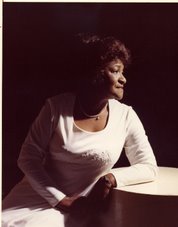
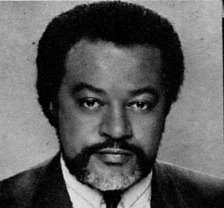
Paternal Geat-grand Parents, Mittie and Jacob Smith
Showing posts with label Dennis Day. Show all posts

Saturday, June 18, 2011

Archives Reveal Family History

Before the wave of genealogical reality shows appeared on television, predating Ancestry.com and DNA swabs that connect folks to common ancestors, I had begun to do serious research into my ancestral roots. It's ongoing and here is an article that I wrote and published in the New York Gannett newspaper chain in 1984. After reading the book "The Warmth of Other Suns" about the Great Migration of blacks from the South, I have decided to post my original article here:


Viewpoints
Gannett Westchester Newspapers Sunday, March 18, 1984 Section B, Page 8

Daily, the National Archives, headquartered in Washington, becomes a beehive of activity. It is a place where tourists gaze into microfilm machines examining census records hoping to connect the branches of their family trees.

An occasional researcher manages to experience the jubilation Alex Haley, author of “Roots,” must have derived in his first association of two clue words, “kamby balongo” (river) and “malonga” (drums”), words passed down to him through stories as told by his African ancestors.

Family histories are often handed down orally and not recorded, so it is rare when the casual tourist does connect the links in his or her family tree. Facts such as county of residence, age, and origin of birth often become distorted so that by the time th serious researcher has assembled useful clues, the processes of gleaning fact from fiction becomes the researcher’s nightmare.

Changes in zoning laws and the names of cities and towns over the years can literally, on paper, displace entire families into different governmental suburbs, towns, villages or counties. Because of dislocations resulting from natural catastrophe, nonuniform census laws and lost census data, only one in 100,000 Americans is able to trace his family origins. The National Archives, located several blocks east of the White House, is a prime source for finding valued volumes of family census and manuscripts.

In 1977 I had written a column for the now-defunct Philadelphia Evening Bulletin that criticized London Times reporter Mark Ottaway’s assertion that Haley’s work was based upon bogus research. Curiosity over my own heritage later would lead me to embark upon a genealogical journey armed with two clues; the name of my great-grandfather, Anderson Day, and the county of Barbour in Alabama. I began.

First, I registered along with the other anxious tourists. I was then given a card that entitles one to conduct research. I came across the Alabama volume and proceeded to seek references to the surname Day.

Hundreds of Days surfaced; all were Caucasian and no blacks were shown. After a conversation with an archives floor supervisor I learned that only free blacks were counted in the Alabama census before 1880, and only those owning property in many cases were even included in 1880 and afterwards until the census laws were reformed.

Now as I reeled through the microfilm, traveling through each of the Alabama counties of 1880, I recalled our family’s brief trips to Phenix City, Alabama, my father’s hometown about which a movie was made entitled “The Phenix City Story.” The film depicted the violence, corruption, and racism in the deep South of the mid 1950’s. There were memories of learning to ride bareback and being baffled by stern parental instruction in proper southern etiquette when found among southern white folk.

The customary, “yes, sir” and “yes, ma’am” apparently were valuable lessons when traveling south for northern black children in the 1950’s. The nostalgia had begun to fade when suddenly the name Anderson Day appeared! Several long distance telephone calls confirmed my finding. But shown among the household reported in the census records was even another black male: Simon Peter Day, 75, relationship to the head of household: father, birthplace: Virginia. Apparently, I had stumbled across an heretofore undisclosed family fact. Patriarch Simon Peter Day had lived with his wife, Julia, 60, and son, Anderson Day, in an extended nuclear family so common in 1880.

By cross referencing census tracts, historical data gathers new information, new births, deaths, marriages, and changes in economic status such as from sharecropper to property holder.

Next, I would spread my search into Virginia, Simon Peter’s birthplace, in search of any references documenting his origins there. By day’s end, I had gone through the Virginia census of 1810 for Fairfax County when I found head of family Simon Peter Day, status: free Negro, servants: two slaves owned.

National Archives supervisors attested to the rarity of my discovery. Only a few free Negroes were even registered in Virginia during this census period. Fairfax County, VA is separated from the District of Columbia by the Potomac. A 1792 law requiring free blacks to register was largely ignored for 20 years, so a number of blacks freed or born free of the estates of George Washington and George Mason, whose Declaration of Rights in the Virginia constitution was an inspiration for the Declaration of Independence, were irregularly recorded.

I found the best theory and clues to my ancestors’ movements in the Fairfax Chronicles, a Virginia history newsletter. By 1782, the number of blacks in Fairfax County was more than 3,600, 41 percent of the population. One hundred eighty-eight of these were owned by Washington and 125 by Mason, whose wealth allowed him leisure time to write his declaration.

The 1782 Virginia emancipation law allowed free blacks to remain in Virginia. Then the 1782 law was amended in 1806. Simon Peter was in his teens. The amended law provided that all newly freed blacks once again were legally required to leave Virginia or risk being sold into slavery.

The incentive to remain free seemed the only reasonable one as I reflected on that memorable day in the archives. Simon Peter Day desired freedom for himself and his family.

Sunday, February 13, 2011

Roots Will Endure by Dennis Day

During this Black History Month I dug into my personal archives and would like to share the following essay. The explosion in genealogical research, triggered over three decades ago by Alex Haley’s landmark book Roots and the blockbuster TV miniseries that followed, continues to attract thousands of researchers seeking to make ancestral connections. I published the following essay in the Philadelphia Evening Bulletin in 1977, immediately after the first airing of Roots, in response to a critique of Haley’s work. Shortly after the Roots sensation, I began my own genealogical journey and discovered an amazing familial history. More on that later. Here is my essay:


During the coldest week of the winter, a reported 130 million Americans viewed the ABC-TV dramatization “Roots” and were led to reflect in their cozy living rooms on the barbarous conditions that were imposed on blacks under chattel slavery.


Now efforts are afoot to discredit not only the grand patriarch of “Roots” – Kunta Kinte – but also the literary judgment of his grandson four times removed, Alex Haley, the book’s author.


Thanks to reporter Mark Ottoway of the London Times, who went sleuthing in the Gambian village where Haley sought his ancestral fathers, a remarkable feat of genealogical detective work is being questioned on its merits as a historical narrative.


Ottoway’s attempt to debunk the book could have a depressing effect on Juffure, the Gambian village where Kunta Kinte grew up. As a result of Haley’s narrative, the village is becoming a tourist attraction. But more is at stake in the “Roots” controversy than the economic fortunes of an African village, as important as they are.


Ottoway’s dig at the roots of “Roots” smacks of sensationalism; of a desire to unmask the book as more fantasy than fact. But his effort to reduce Haley’s chronicle to a mere myth won’t alter the symbolic truth behind the people and events depicted by Haley. “Roots” will not wither nor die.


Ottoway is within his rights to challenge, question, and seek the truth. Sound investigative journalism helped shed light on the Watergate fiasco for Americans. Yet it somehow seems absurd that a work that took over 12 years to complete should face a serious challenge from a reporter whose counter-intelligence efforts took an estimated nine days.


Ottoway’s main charge is that, in his eagerness to discover his African ancestors, Haley was the victim of a bogus “griot,” or village historian. The Britisher claims that, having been apprised of Haley’s quest beforehand, the griot obliged with “facts” to fit Haley’s dream.


Ottoway, in short, asserts that Haley learned of Kunta Kinte from a man of “notorious unreliability.” Yet cultural anthropologists have long valued the accounts of “griots” in cultures in which oral history flourishes. Village griots are not to be confused with village idiots. In cultures that rely on oral history, they have a position of real trust and status.


One should not forget that Haley’s search for his African roots began with cherished stories about “the defiant African” that were told by Haley’s relatives on balmy southern nights in Henning, Tennessee.


After diligent searching through plantation records, Haley was able to fill in most of the details of the American lives that preceded his. With the help of a linguistic expert in 1967, Haley traced his bloodline in Gambia through three African words that were used commonly and idiomatically among the villagers of Gambia.


Haley must have known how much scrutiny his book would attract, and he has offered to debate his critics on the reliability of his methods. As one who heard the author lecture in 1974 at a Midwestern college, prior to the publication of “Roots” my single most lasting impression was of the precision and consummate dedication that Haley was investing in the completion of his genealogical mosaic.


The Mark Ottoways of the world will undoubtedly persist, by their own lights, with the same sort of tenacity – and no doubt there will be critics of the critics.


As the critics attempt to uproot “Roots,” however, the sad thing will be their lack of facility in sorting out the forest from the trees. Despite minor technical flaws that some historians have found in “Roots,” the spirit of Kunta Kinte’s epic will prevail and its importance as a human chronicle will stand as tall as the California redwoods.


(Dennis Day is a supervisor in the Division of School Extension of the Philadelphia School District.)

Friday, October 15, 2010

Emmett Till's Saga:Painful Lesson on Path to Healing

America has made a great deal of progress towards its democratic ideal of racial equality, one might argue, yet much remains to be done.The assassination of 15 yr. old Emmett Till in 1955 was a benchmark for a nation torn by the deep evil grasp of racial hatred, segregation and the irrational hate response generated by racial social codes and accepted conventions around racial difference and skin color.

The young Chicagoans' murder was a homegrown act of racial terrorism designed to instill fear. This cowardly act disturbed, enraged, angered and indeed did frighten some mothers and families fearing a similar fate for their sons, but more importantly it galvanized communities both black and white to shun fear and instilled an attitude of resistance that evolved into the modern Civil Rights Movement.History can be painful but it is important that it's lessons are learned, less we repeat our mistakes.The story of Emmett Till remains etched deeply in our national psyche but we as Americans shall continue to overcome.

(Warning some of the images in the video post may be disturbing)D-Day Media Group's mission is to inform not offend and educate toward a shared reconciliation)

Wednesday, February 3, 2010

Chicago Area’s Jesus of Nazareth an Institution by Dennis Day

Among Chicago-land’s array of attractions, the passion play Jesus of Nazareth has become a “must see” theatrical event. The passion play is directed by Steve Munsey, pastor of the Family Christian Center, a mega church located 30 minutes outside Chicago in Munster, Indiana that has attracted nearly10,000 members. Several years ago Munsey’s church erected a permanent set depicting Old Jerusalem, which spans nearly 100 feet. From this elaborate set, Munsey directs a cast and crew of 2,000, bringing the story of Jesus of Nazareth to life in a manner resembling today’s big-budget Broadway productions. Actors and volunteer crew, make-up artists, seamstresses, carpenters and the hundreds who help make the play a success year-end and year-out are passionate in their zeal for the project’s mission to share the story of Jesus Christ’s life, death and resurrection.

Pastor Steve, as he is fondly known, is a charismatic figure who possesses a flair for dramatic illustration. He is often seen in different roles as a fervent evangelical fundraiser on TBS and CBN television channels. His long running production of Jesus of Nazareth was first staged in an outdoor amphitheater in the Seattle Washington area where a version of it continues to be seen today.

The Chicago-area passion play production features a variety of unique theatrical highlights that entertain and dazzle an ever-growing diverse audience comprised of every conceivable demographic classification, religious denomination , ethnic background from urban and rural America, attracting conservatives and liberals.

Matinees and weekend night performances of the passion play begin in February and run until after Easter. Theatergoers arrive by bus caravan, church van, or in family recreational vehicles. Youth groups, singles, and couples seeking a departure from the normal weekend dating regimen flock to Jesus of Nazareth each season. Steel workers, farmers, lawyers, clergy and VIP entertainers and politicians like former Vice President Dan Quayle and Oprah Winfrey have been among those to view the stunning Mid-West production. They come in droves from towns large and small, mostly throughout the mid-west but also from points vastly farther away. Through word of mouth each year the crowds are attracted and they come expecting to see a dazzling theatrical spectacle.

Live camels, horses, period chariots, cascading waterfalls, and fireworks explosions simulating earthquakes as Jesus is crucified are featured. There is even an obligatory Hollywood style chase scene employing electrifying aerial stunts as a thief attempts to escape amidst a crowded street scene. Biblical or historical revisionism, Mmmm? I’ll leave that to theologians to figure out. Great theater? Definitely! The verdict is in. Jesus of Nazareth is a hit, attracting larger audiences each year.

Many viewers leave the experience strangely aware that they have experienced a wonderfully engaging medium, the theater, for translating a familiar biblical account into something viscerally powerful that becomes for some spiritually transformative and perhaps for others purely interesting entertainment.

During one the play’s early incarnations, I had the honor of being chosen from an open casting call to play a principal role as Pontius Pilate – a first for an African American. This season, I plan to attend a performance of Jesus of Nazareth, but this time as a spectator not an actor. When the curtain closes I’m sure I’ll continue to ask myself the same rhetorical question for which neither Pontius Pilate, I, nor anyone since has found a definitive answer, “Truth! What is truth”? If you plan to visit Chicago in the next two months, do yourself a favor and check out Jesus of Nazareth.

Thursday, January 28, 2010

Reflections on Howard Zinn by Dennis Day


Howard Zinn, a progressive voice for racial equality and social justice for more than half a century, died Wednesday in Santa Monica, California. He was 87. An historian, shipyard worker, civil rights activist, World War II bombardier, and best selling author, Zinn inspired a generation of high school and college students to rethink American history.

In June 2007 I had the privilege of interviewing Dr. Zinn during the Harlem Book Fair, an annual event that encourages children and families to read and value books and learning as a means of cultivating the “life of the mind.” Our interview was conducted amidst paparazzi during my work as a consultant with a film crew shooting an historical documentary film about the Harlem Renaissance and the changing racial and cultural dynamics of Harlem in the twenty-first century.

The film, a work still in progress, is produced and directed by the award-winning African American Filmmaker William Greaves. I was impressed by Dr. Zinn’s candor and vigorous mind. He struck me as one resigned to the pursuit of intellectual honesty and open to debating those of differing ideological points of view. Dr. Zinn taught at a number of prestigious institutions, including Spellman College, and historically Black college, where he was chairman of the history department. Marion Wright Edelman, founder of the Children’s Defense Fund and Alice Walker the novelist were among his students. Dr. Zinn was also an active member of the Student Nonviolent Coordinating Committee and marched for civil rights with his students, an act that angered Spellman’s president and was reportedly caused his termination for insubordination.

Howard Zinn’s productive literary years followed during his tenure at Boston University, producing the antiwar books “Vietnam: The Logic of Withdrawal” (1967 and Disobedience and Democracy” (1968). An Associated press obituary of Zinn asserts “Few historians succeeded in passing so completely through the academic membrane into popular culture. He gained admiring mention in he movie “Good Will Hunting”; Matt Damon a neighbor and admirer of Dr. Zinn appeared on a History Channel documentary about him; and Bruce Springsteen said the starkest of his many albums, “Nebraska,” drew inspiration in part from Mr. Zinn’s writings. As for me I drew from his example a greater self-assuredness that the power of one’s moral convictions can and do make a difference worth pursuing despite the status quo.

Monday, December 28, 2009

My Remembrance of The Honorable Percy E. Sutton

As one who lives in the Village of Harlem, I've come to know and experience life here as an astounding rainbow of humanity – people of all colors, ethnicities and backgrounds reside, work, and visit daily. One of the most brilliant stars to shine in Harlem's multi-cultural mosaic was the Honorable Percy E. Sutton, who passed away December 26.Over the years I have watched as this brightest stripe in Harlem’s rainbow gracefully aged, growing halting in step and slightly slumped of shoulder, yet somehow still seeming the tallest and most elegant of figures on 125th Street, the corridor that he and his vision of a resurrected Apollo Theater helped to transform into a major shopping and cultural destination.

Mr. Sutton loved New York City and embraced Harlem and its residents as though they were family. I live one block from Mr. Sutton's Harlem offices (he also had offices in the city's financial district). I would often see him often along 125th Street, always immaculate, gracious, and never too busy to engage in conversation. For some years I have observed this great man, son of a slave, a Tuskegee Airman, attorney, and successful media mogul who, like the verse in Kipling's sonnet, "walked with kings but never lost the common touch.”

A decade ago when I decided to re-direct my career in pursuit of music and media, I sought Mr. Sutton's wise counsel. He was relaxed and plain spoken with people and he spoke with me as though I were a son. I noticed in that meeting that Mr. Sutton’s loyal staff was loving and protective. He remarked on how important they were to him and pointed out that his right-hand assistant ensured that he was kept abreast of details, correct facts, and even unfamiliar words. He told me, in his sonorous Texans' accent, "young man there's always something to learn, so be sure to surround yourself with people who know as much or more than you do and never stop learning.”

Meeting and greeting my mentor on the street always ensured a good day, touched with inspiration and hope through his smile and kind words of encouragement. The Honorable Percy E. Sutton was ever genteel, poised, and possessed an air of dignity and confidence that never failed to make me proud to be an African American and to have known him. RIP, Mr. Sutton.