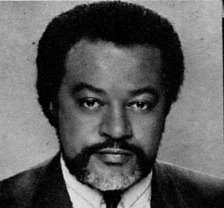
Archives Reveal Family History

Archives Reveal Family History
Paternal Geat-grand Parents, Mittie and Jacob Smith

Friday, March 18, 2011

Melvin Sparks Allowed His Music to Transcend Race and Religion

Melvin Sparks Allowed His Music to Transcend Race and Religion

by Dennis Day on Thursday, March 17, 2011 at 10:29pm

I attended the funeral of Melvin Sparks Hassan today, in Mt. Vernon, New York, 20 miles north of Manhattan. Melvin was a devout Muslim. He passed Tuesday, March 15th. suffering a heart attack at home, he was 64 years old.

It was a very interesting learning experience for non-Muslims like me. I learned about some aspects of the Islamic faith that were unfamiliar to me , particularly regarding sacred burial customs. America is a remarkably diverse place. Our nation’s diversity is its strength. As global citizens we must actively pursue experiences that broaden our individual and collective understanding of one another . Sadly many of our citizens balk at learning about others customs and beliefs. It therefore becomes easier to demonize and cast those not sharing the majority’s beliefs and practices as so called “others” even when the “other” represents over a billion human beings on the planet. Many great musicians and friends paid their respects to the Texas born guitarist. They represented every creed : Jews, Muslims, Christians, race, gender and nationality. Melvin's new band consists of young white musicians whose love and devotion for this gentle soul was apparent, Sparks is regarded as one who helped pioneer the genre known as Acid Jazz. Band members attempted to hold back tears of grieve when sharing memories and amusing stories of long hours traveling on the road together. The guitarist and band leader’s impact on his young charges was highlighted in terms of his being caring but stern father figure. He was described as a wonderful mentor, teacher and wise disciplinarian. Recalling their leader as one infused with a joy for life, love of music and friendship proved too over whelming . Their tears flowed as the audience listened but ceased after a vibrant musical jam session and repast in celebration of Melvin’s remarkable life .

Melvin never seemed to wear his faith on his sleeve, he lived it with a generous and buoyant spirit. Having known and gigged with Melvin over the years, I’m hopeful and believe that racial and religious tolerance are achievable. He left a fine example for his fellow Muslims, and Non- Muslims alike to immulate in terms of learning to respect and value others solely on the basis of the content of their character.

At the repast, I was privileged to sing with Nathan Lucas the wonderful Hammond B3 organist and a fine trio anchored by drummer, Jessie "Cheese" Hamin before an appreciative gathering of family, artists and hosts of friends. It was a beautiful home going celebration. RIP

Sunday, February 13, 2011

Roots Will Endure by Dennis Day

During this Black History Month I dug into my personal archives and would like to share the following essay. The explosion in genealogical research, triggered over three decades ago by Alex Haley’s landmark book Roots and the blockbuster TV miniseries that followed, continues to attract thousands of researchers seeking to make ancestral connections. I published the following essay in the Philadelphia Evening Bulletin in 1977, immediately after the first airing of Roots, in response to a critique of Haley’s work. Shortly after the Roots sensation, I began my own genealogical journey and discovered an amazing familial history. More on that later. Here is my essay:


During the coldest week of the winter, a reported 130 million Americans viewed the ABC-TV dramatization “Roots” and were led to reflect in their cozy living rooms on the barbarous conditions that were imposed on blacks under chattel slavery.


Now efforts are afoot to discredit not only the grand patriarch of “Roots” – Kunta Kinte – but also the literary judgment of his grandson four times removed, Alex Haley, the book’s author.


Thanks to reporter Mark Ottoway of the London Times, who went sleuthing in the Gambian village where Haley sought his ancestral fathers, a remarkable feat of genealogical detective work is being questioned on its merits as a historical narrative.


Ottoway’s attempt to debunk the book could have a depressing effect on Juffure, the Gambian village where Kunta Kinte grew up. As a result of Haley’s narrative, the village is becoming a tourist attraction. But more is at stake in the “Roots” controversy than the economic fortunes of an African village, as important as they are.


Ottoway’s dig at the roots of “Roots” smacks of sensationalism; of a desire to unmask the book as more fantasy than fact. But his effort to reduce Haley’s chronicle to a mere myth won’t alter the symbolic truth behind the people and events depicted by Haley. “Roots” will not wither nor die.


Ottoway is within his rights to challenge, question, and seek the truth. Sound investigative journalism helped shed light on the Watergate fiasco for Americans. Yet it somehow seems absurd that a work that took over 12 years to complete should face a serious challenge from a reporter whose counter-intelligence efforts took an estimated nine days.


Ottoway’s main charge is that, in his eagerness to discover his African ancestors, Haley was the victim of a bogus “griot,” or village historian. The Britisher claims that, having been apprised of Haley’s quest beforehand, the griot obliged with “facts” to fit Haley’s dream.


Ottoway, in short, asserts that Haley learned of Kunta Kinte from a man of “notorious unreliability.” Yet cultural anthropologists have long valued the accounts of “griots” in cultures in which oral history flourishes. Village griots are not to be confused with village idiots. In cultures that rely on oral history, they have a position of real trust and status.


One should not forget that Haley’s search for his African roots began with cherished stories about “the defiant African” that were told by Haley’s relatives on balmy southern nights in Henning, Tennessee.


After diligent searching through plantation records, Haley was able to fill in most of the details of the American lives that preceded his. With the help of a linguistic expert in 1967, Haley traced his bloodline in Gambia through three African words that were used commonly and idiomatically among the villagers of Gambia.


Haley must have known how much scrutiny his book would attract, and he has offered to debate his critics on the reliability of his methods. As one who heard the author lecture in 1974 at a Midwestern college, prior to the publication of “Roots” my single most lasting impression was of the precision and consummate dedication that Haley was investing in the completion of his genealogical mosaic.


The Mark Ottoways of the world will undoubtedly persist, by their own lights, with the same sort of tenacity – and no doubt there will be critics of the critics.


As the critics attempt to uproot “Roots,” however, the sad thing will be their lack of facility in sorting out the forest from the trees. Despite minor technical flaws that some historians have found in “Roots,” the spirit of Kunta Kinte’s epic will prevail and its importance as a human chronicle will stand as tall as the California redwoods.


(Dennis Day is a supervisor in the Division of School Extension of the Philadelphia School District.)

Tuesday, February 8, 2011

Bill O'Reilly - Obama Super Bowl Interview

Bill O'Reilly's Interview with President Obama:Truth Zealot or Rude Pundit?

According to some pundits, Bill O’Reilly did exactly what he was hoping not to do. Before the interview O’Reilly wrote that he would not interrupt the president. In their previous interview during the 2008 presidential election, O’Reilly reportedly had interrupted Obama multiple times. But now O’Reilly asserted he could not do that because Obama is now the president and there is protocol to presidential interviews. There is an ethos among journalists that makes it impolite to interrupt the President of the United States. Even if you don’t respect the man, you should respect the office. But O’Reilly showed little respect and interrupted the president almost every time he spoke.


Some pundits, like those from the Center for Pragmatism, believe the interview will hurt O’Reilly and help Obama, observing that Obama came across as friendly even to a fierce critic. O’Reilly on the other hand seemed arrogant, rude, and disrespectful. An empirical analysis presented on MSNBC's Lawrence O'Donnell's show Monday and Tuesday nights indicates that O'Reilly interrupted the president 72 times -- once every 19 seconds -- during their highly anticipated interview, without allowing Mr. Obama to complete one thought.


O’Reilly doled out an unprecedented display of incivility, rudeness, and what I perceive as misguided paternalism dished to the wrong guy. The president was, as usual, presidential and appeared above the fray, like a tolerant school master suffering a mischievous student prankster. Despite the verbal bombast, O’Reilly’s interview failed to garner the blockbuster viewer numbers Fox and O'Reilly had anticipated. Apparently Fox executives had projected Barbara Walters-Monica Lewinski-type viewership numbers but fell far short of their ratings expectations.


It's disappointing to see Fox analyst Juan Williams towing the Fox spin hook, line, and sinker. I’ve met and interviewed Juan Williams and I find him to be a real gentleman and astute political analyst, but I'm afraid he's lost all sense of rational political perspective. Williams and the punditry at Fox News overwhelmingly believe O’Reilly conducted himself appropriately.


Not in my lifetime, nor in my recollection of American history has a sitting president been treated with such lack of decorum by a so-called journalist. O’Reilly’s assertiveness guised as zealousness for truth bordered on sheer contempt; his performance was a painful reminder of by-gone era in our history when the defense position in the landmark 1896 Supreme Court ruling in the case Plessey vs. Ferguson acquiesced to the conventional Southern racial mores of the day, that "A black man had no rights that a white man is bound to respect.” The court’s ruling led to a doctrine of separate but equal accommodations that took another fifty years to overturn when it was finally ruled as blatantly unjust and unconstitutional.


Hopefully, as a nation we’ve transcended much of the level of inhumanity and animus that spawned such irrational racial assumptions for several centuries. That’s why it’s disturbing to hear refrains from some ultra conservatives and pundits like Mr. O’Reilly who speak in terms of wanting to “right our American ship” and turn things back to the way they used to be; a loaded phrase that’s always been troublesome for many minorities in America. The American people have outgrown such flawed, racially charged suppositions. We need solutions and rational discourse in which civility is the order of the day. It starts with learning to listen respectfully to one another.

Monday, January 17, 2011

Martin Luther King Day Events - News 10 WTEN: Albany, New York News, Weather, Sports

Martin Luther King Day Events - News 10 WTEN: Albany, New York News, Weather, Sports

Dr. King Day: A Fresh New Look

Are Americans united around the notion of a genuine celebration and acceptance of Dr. King Day as a national holiday? From the time Congressman John Conyers (D - Michigan) first introduced legislation for a commemorative holiday four days after King was assassinated in 1968, it took 15 years to create the federal Dr. Martin Luther King Holiday. After the bill became stalled, petitions with six million signatures endorsing the holiday were submitted to Congress. Conyers and New York representative Shirley Chisholm submitted King Holiday legislation each subsequent legislative session until Congress passed it in 1983. President Ronald Reagan, who had staunchly opposed the bill, citing its costs, and who had three years earlier kicked off his bid for the presidency in Philadelphia, Mississippi – a lingering symbol of racial intolerance and the site where civil rights workers Cheney, Goodman, and Schwerner were murdered – reluctantly signed it into law, declaring the third Monday in January National Dr. Martin Luther King Day.

Among my proudest moments was marching arm-in-arm with thousands of other peaceful demonstrators on the Washington Mall back in1982 and 1983, led by Stevie Wonder, who was a committed key figure advocating for the Dr. King national holiday. Other marchers included Dr. King’s widow Corretta Scott King, Reverend Jessie Jackson, scores of dignitaries, celebrities like Diana Ross, Gladys Knight, and Ossie Davis, along with us everyday citizens.

Yet still today I remain confounded that some leaders on the state and national level seem to negate the potential of this holiday as more than a mere political photo op. They marginalize its importance as a teachable moment and meaningful opportunity to embrace Dr. King’s amplified vision of William Bradford’s concept of a “beloved community” imbued with collective means by which to heal, build, and unify through service projects that promote reconciliation and tolerance. Just as he led his life in active pursuit of service to others and justice for all, Dr. King’s holiday should be active, never passive. These are the ideals out of which the American spirit and our shared values are honed, but to date these ideals seem lost on some government leaders at local, state, and national levels.

Some municipalities have allowed that any national commemoration of this celebration of the human spirit is optional and viewed it with a ho-hum attitude. Some states confine the place of the holiday to classrooms, treating it as a mere academic exercise. For example, California focuses its King Day observances largely within public school districts, encouraging “a day of reflection on Civil Rights.”

But other states take a more active stance. For example, New York State emphasizes year-long volunteerism along with cultural, artistic, and community cooperation. Beginning in 1997, the Empire State’s Community Services Initiative to Remember and Honor Dr. Martin Luther King Jr. was established. This is a model that could well serve to show the way for other states’ involvement in creating inventive ways to honor and celebrate Dr. King though community service.

The King Community Service Initiative urges New Yorkers to strengthen their communities by extending their hands to help the homeless and to care for the less fortunate. The common thread that links the various King Community Service Initiative activities is outreach beyond conventional social boundaries to promote interracial cooperation. Community Service Initiatives offer a rare socially progressive departure from the policies of former Governor George E. Pataki, a moderate conservative Republican with an otherwise questionable record in the areas of urban education reform and civil rights administration and enforcement – areas critical to achieving socio-economic parity and harmonious race relations.

Despite the Pataki administration’s dubious record on matters of socioeconomic and racial parity, growing involvement of individuals, schools, churches, and community groups in the state; broad energized celebrations demonstrate just how far reaching an executive initiative can be for establishing the right tone and setting a sterling national example of actualizing Dr. King’s mantra of working to create the “beloved community.”

The writer, Dennis Day served on the Planning Committee for New York State’s Annual Holiday Observance to Remember and Honor Dr. Martin Luther King Jr. Holiday from its inception in1997.

Martin Luther King Day Events - News 10 WTEN: Albany, New York News, Weather, Sports

Martin Luther King Day Events - News 10 WTEN: Albany, New York News, Weather, Sports